더 많은 중국어 읽기 연습 찾아보기
2026년 9월 2일 수요일 · 597 단어 · 3 분 · 0 읽다 · 전문가
기사 세부정보
이 등급별 중국어 읽기 연습 자료는 진정한 읽기와 선택적인 병음, 번역, 오디오, 어휘 및 이해력 연습을 결합합니다.
- 작성자
- HSK Read
- 게시됨
- 2026년 9월 2일 수요일
- 업데이트됨
- 2026년 9월 10일 목요일
읽기
질문과 답변 읽기
Why did the ministers not dare to dissuade King Wu when he decided to attack Chu?
They feared angering the king.
What did the young scholar think would be the consequence of direct remonstrance?
It would only anger King Wu.
Why did the young scholar choose to enter the royal gardens in the early morning?
To catch King Wu's attention during his morning walk.
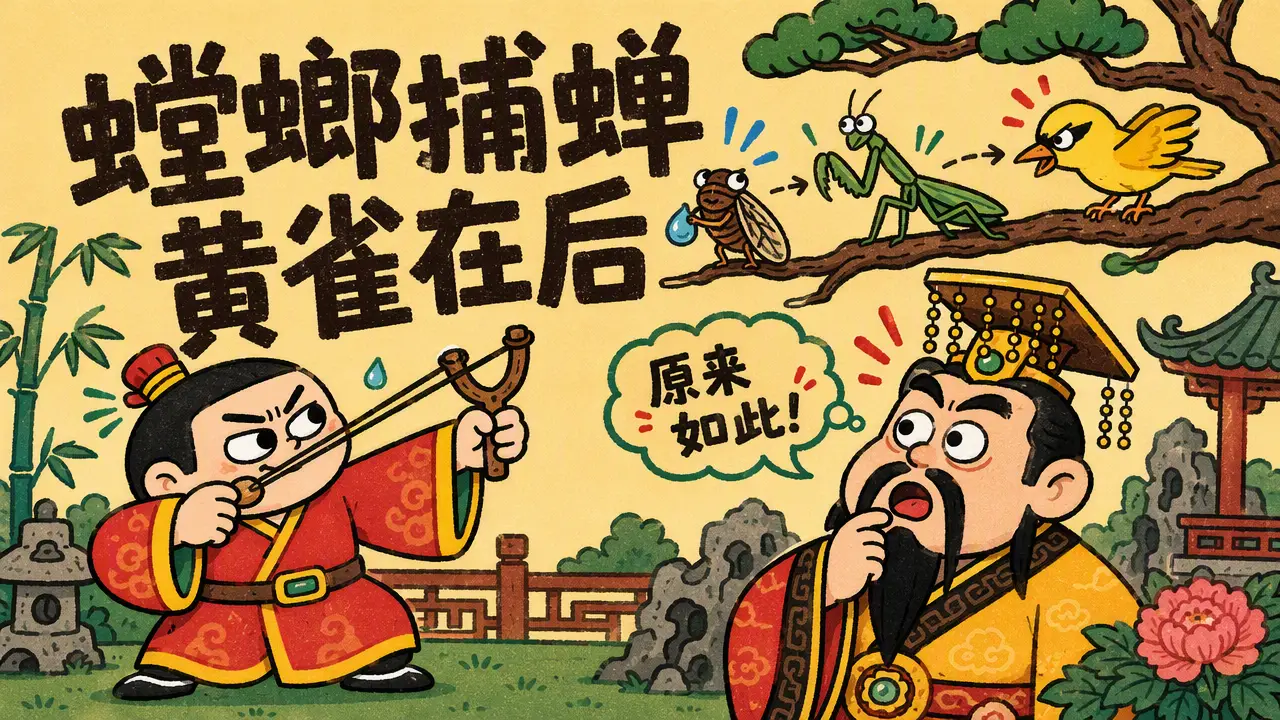
In the allegory, why did the mantis not notice the oriole behind it?
Because it was focused solely on catching the cicada.
Why did King Wu finally stop the campaign against Chu?
He realized Yue might take advantage of Wu's weakness.
At the end of the story, it says Wu's treasury was full and borders were calm for years. What does this mainly illustrate?
Accepting remonstrance brought stability to the state.
What aspects of King Wu's character are mentioned in the text?
Known for violence but good at accepting remonstrance.
Where is the wisdom of the young scholar mainly shown in the text?
He knew how to use allegory to enlighten the king.